NYC Rewrites the Debt Collection Playbook — And the CFPB May Not Be Around to Enforce Federal Rules
By Mighty Mike Reid
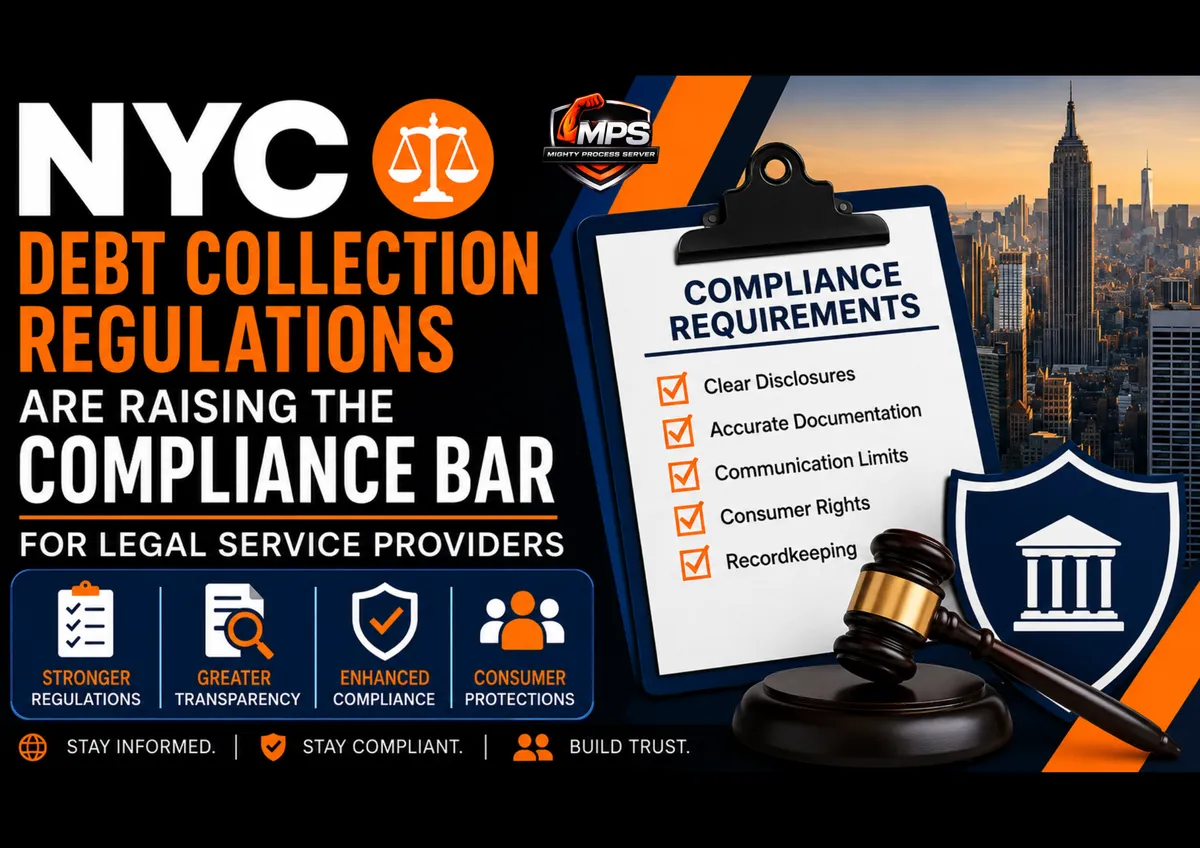
NYC Debt Collection Regulations Are Raising the Compliance Bar for Legal Service Providers
New York City continues to position itself as one of the most consumer-protective jurisdictions in the country, and recent updates to NYC debt collection regulations are another example of that trend. For attorneys, collection firms, and process servers in NYC, these developments signal a growing emphasis on transparency, documentation, and regulatory compliance.
At the same time, questions surrounding CFPB debt collection enforcement at the federal level have created uncertainty about the future of debt collection oversight nationwide. Together, these developments are reshaping how legal professionals approach debt collection matters and manage compliance risks.
Why NYC Is Taking a More Aggressive Regulatory Approach
Debt collection has long been an area of scrutiny for regulators. Consumer complaints regarding communication practices, account documentation, and debt verification have prompted lawmakers to strengthen protections at both the state and local levels.
The latest NYC debt collection regulations focus heavily on ensuring consumers receive clear information about alleged debts and understand their rights throughout the collection process.
For businesses involved in debt collection, the message is clear: documentation, accuracy, and compliance are becoming increasingly important.
Understanding the Difference Between NYC and Federal Debt Collection Laws
One of the most important considerations for legal professionals is understanding the distinction between NYC vs federal debt collection laws.
Federal debt collection rules primarily stem from the Fair Debt Collection Practices Act (FDCPA), which establishes baseline standards for how debt collectors may communicate with consumers and pursue collections.
New York City, however, has implemented additional requirements that often exceed federal standards. These local regulations may require enhanced disclosures, stricter communication limitations, and additional consumer protections beyond what federal law mandates.
For debt collection process servers and legal professionals, compliance requires understanding both regulatory frameworks simultaneously.
The Continuing Role of the CFPB
The Consumer Financial Protection Bureau remains one of the most influential agencies in the debt collection industry. Through rulemaking, investigations, and enforcement actions, the CFPB has shaped debt collection practices across the country.
CFPB debt collection enforcement has helped establish national standards regarding consumer communications, recordkeeping, dispute handling, and disclosure requirements.
Many organizations have built their compliance programs around CFPB guidance because federal enforcement actions can carry significant financial and reputational consequences.
The Impact of CFPB Changes on the Industry
Recent legal and political debates have raised questions about the future scope of CFPB authority. While the agency continues to operate, uncertainty surrounding future enforcement priorities has generated discussion throughout the debt collection industry.
The potential impact of CFPB changes could vary significantly depending on how federal oversight evolves.
If federal enforcement becomes less aggressive, state and local jurisdictions may take a larger role in regulating collection activity. Cities such as New York are already demonstrating a willingness to establish stricter requirements that go beyond federal minimum standards.
For legal service providers, this means local compliance may become just as important as federal compliance.
What Process Servers in NYC Need to Understand
Although process servers do not collect debts themselves, process servers in NYC frequently support debt collection litigation by serving summonses, complaints, notices, and other legal documents.
As a result, they often operate within cases that are heavily influenced by consumer protection regulations.
Understanding NYC process server requirements becomes increasingly important when serving documents connected to debt collection actions. Accuracy, proper service procedures, and thorough documentation help ensure cases move forward without unnecessary challenges or delays.
The stronger the regulatory environment becomes, the more valuable precise service records become.
Documentation and Compliance Are Becoming Competitive Advantages
One of the major themes emerging from modern debt collection enforcement NYC trends is the growing importance of documentation.
Law firms and collection agencies increasingly expect vendors and service providers to maintain detailed records, accurate timelines, and reliable service documentation.
Process servers who consistently deliver:
Accurate affidavits
Detailed service notes
Verified timestamps
Complete service histories
Professional reporting
are often viewed as lower-risk partners by legal clients.
In a heavily regulated environment, documentation quality can become a significant competitive differentiator.
Preparing for a More Complex Regulatory Environment
The combination of evolving NYC debt collection regulations and potential CFPB future implications means legal professionals must remain proactive.
Successful organizations are investing in:
Ongoing compliance education
Standardized documentation procedures
Technology-driven recordkeeping
Strong communication protocols
Regular regulatory monitoring
These investments help reduce risk while ensuring operational consistency across cases.
How Technology Supports Compliance
Modern case management and process serving platforms can play an important role in maintaining compliance.
Digital workflows help capture service information accurately, preserve documentation, and create audit trails that support legal proceedings. Automated reporting and record retention systems also help firms respond more effectively to client requests and regulatory inquiries.
As regulatory expectations increase, technology becomes a practical tool for managing compliance efficiently.
The Future of Debt Collection Compliance
Whether federal oversight expands, contracts, or shifts direction, one trend appears certain: compliance expectations will continue to increase.
The impact of CFPB changes may vary over time, but local governments such as New York City are unlikely to reduce their focus on consumer protections. For debt collection process servers, attorneys, and legal support professionals, success will depend on staying informed and adapting quickly to changing requirements.
Organizations that prioritize compliance, documentation quality, and operational transparency will be best positioned to navigate the evolving regulatory landscape.
As debt collection enforcement NYC continues to develop, legal service providers must view compliance not as an administrative burden but as a critical part of delivering professional, reliable service.
Article provided by Mighty Process Server (MPS).
Stay sharp. Stay informed. Live Mighty!
Read the full article at www.mightyprocessserver.com
This article is published by Process Server Daily, powered by MightyAutomation.ai, the leader in legal support intelligence.